Tuesday, February 22, 2011

Kingdom of Sheba


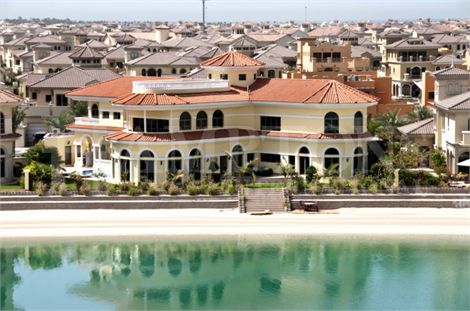
Certain to become a significant landmark and as one of the largest and most ambitious projects on The Palm Jumeirah, the Kingdom of Sheba has four separate and spectacular elements. Gracing The Crescent, on 141,500 sq. metres of prime land, the Kingdom of Sheba is adjacent to the trailblazing Atlantis. Reminiscent of Arabia’s ancient cities, the Kingdom of Sheba has a sense of history and grandeur. The construction will reflect the traditional values and symmetry that are inherent to all Yemeni art forms.

The entire development is designed with people in mind and the primary focus is on convenience and standout facilities. The contemporary elegance of the living spaces, the fabulous furnishings and fittings, the inviting outdoor areas and surrounding greenery, the sea and the beach, all contribute to a lifestyle of consummate quality. Live here, spend several weeks a year here or take a great vacation here. The incredible options available at the Kingdom of Sheba offer something very special to both individuals and families.

The residential component, Balqis Residence, consists of 300 residences. There are 34 luxurious villas with 4 and 5 bedrooms, a sea view, private pools, landscaped gardens and 3 parking spaces, and their sizes vary from 1022 m² up to 1340 m². There are 28 elegant town houses of 3 to 5 bedrooms with private pools, landscaped gardens and parking spaces, and their sizes vary from 670 m² up to 998 m². The project also includes 16 duplex penthouses apartments, with 4 and 5 bedrooms, several interior designs, depending on the choices offered like “Signature Villas”, “Royal Villas”, or “Imperial Villas”. Their size is starting from 469 m² up to an incredibly huge area of 1543 m². The other Apartments of 2 to 5 bedrooms will have various sizes starting from 181m² up to 328 m², and will enjoy many facilities including several pools and open parking spaces.

All residences are sea facing with views of the Arabian Gulf and the white sandy beaches. Residents will have access to a shared private beach club, a selection of boutique dining areas, health and fitness facilities, communal pools, meeting areas as well as other upscale amenities. By purchasing a property from Balqis Residence you have the opportunity to rent out your residence through Fairmont Group, keep it for your own personal use or even combine both options.

Related Topics:  
 

Signature Villas, The Palm Jumeirah, Dubai


These exclusive Villas have 650m² of living area distributed on two levels, and 1200m² in plot size. They are located on the fronds of The Palm, and are the most luxurious villas to be purchased on the Palm. You can chose between 6 different types of villas of 5 to 7 bedrooms, of different architectural styles. The villas have marble floors, and exclusive kitchens and bathrooms with refined finishing.

Not only these villas are spacious but their layout is very smart, to make out the best of the provided space. From each and every villa you have a fantastic view of the ocean, and the project as a whole. Signature Villas give you the possibility to enjoy an exclusive luxurious lifestyle.

Related Topics: 
 

REO Speedwagon takes the stage at SeaWorld Orlando

One of the most iconic and hardest-working bands in rock ‘n’ roll – REO Speedwagon takes the stage this Saturday, February 26 at SeaWorld Orlando’s Bands, Brew & BBQ, Central Florida’s can’t-miss BBQ festival and concert series.

Bands, Brew & BBQ is back and bigger than ever with more BBQ, more brews and the best in classic rock and country. Country music’s up-and-comer, Josh Turner, performs on Saturday, March 5 in the final concert of the series.
Bands, Brew & BBQ is included with SeaWorld admission. Concerts begin at 4:30 p.m.
NEW – More BBQ! Local chefs now add an even richer variety of BBQ and great grilled food. BBQ biggies -- 4Rivers, Texas Cattle Co. and Smokey Bones – are cooking on-site and SeaWorld’s own team of chefs round out the menus with home-style beef jerky, kettle chips, buffalo chili and much more. VIP tickets are available and include BBQ and reserved seating for the day’s concert.

NEW – More brew! Wash down that tasty BBQ with an ice-cold brew at the all-new Beer Garden featuring nearly 60 craft beers from 21 different domestic and international breweries. Ale, stouts, porters, lagers – can’t decide on one? Try a 12-variety brew sampler.

The Fun Card is the way to go for unlimited admission! The best way to take in Bands, Brew & BBQ, all the concerts and all of the one-of-a-kind thrill rides and up-close animal adventures is with a SeaWorld Fun Card. The fun is all year long, too. Paying just a day’s admission means coming back again and again to enjoy every one of SeaWorld’s events, including Summer Nights, Halloween Spooktacular and the park’s Christmas Celebration. This spring, there’s even more when Shamu takes center stage in an all-new, must-see killer whale spectacular.

Fun Cards are valid for unlimited admission through Dec. 31, 2011 and available at SeaWorld’s front gate.Click here to get all the details on Bands Brew & BBQ

Ladakh Adventure Tour Packages Perfect for Buzz of Travelling

If you wish to make this year’s holiday of your to have excitement, thrill and adventure all in one then the obvious choice for you must be Leh Ladakh Tour. This is a tour for those who are into the world of fascinating love with trekking and knows the hardships and joys hidden in it. It is located in the Great Himalayan rain Shadow and receives no monsoon during the summer and gets heavy snowfall throughout the long winter. The culture of Tibet is predominant here and you will be able to see that Ladakh Adventure Tour Packages will be taking you to the lanes of unknown Himalayas.

Ladakh Adventure Tour Packages are easily available online you can book them easily. The obvious visiting time is Mid June or Mid October. Leh stands on 3,521m/ 11,552 ft, along with surrounding plan area. This makes you reach to the top of India. The exclusive pictures of the panorama are a must for you. The trekking can be done in parts like the Kargil first, with Zoji La Pass and the town with cobbled strees and apricot groves. The 3 to 4 days trekking from Sanko to Drass via Umba is great and Sanko to Wakka La pass is also thrilling.

Then there is Indus Valley. The last one can be Zanskar. The twin peak Nun-Kun is the main attraction here. The monasteries are also very great over here along with the stunning attractions lying with natural beauties lying here. The journey is tough still you can make it out most with the inspirations being the natural landscapes. The Ladakh Adventure Tour Packages available online will take you to the valley and make you have a Jeep Safari for getting the delight of nature. This may not be as buzz as trekking but is obviously a safe way to be close to the stunning nature lying there.

The Leh Ladakh Tour is for those who want to be in the lap of nature and get the ecstasy of being nature’s guests. Those who can trek and knows the value of trekking must be aware of the fact that nature can be adverse and one needs to be prepared for it here. The glaciers and the snow along with the serene monasteries make you visit the land of God in India. So come and book this India trekking tour to make the best voyage to the lap of nature.

Sources: http://blog.ladakhtrekkingtour.com/ladakh-adventure-tour-packages-perfect-for-buzz-of-travelling/

Monday, February 21, 2011

Saskatchewan’s Hotel Bars Before Prohibition


Bar at the Fielding Hotel, 1915.  Glenbow Archives, NA-3853-23

"You have to be a certain type of person to look after a bar in a hotel, as you meet all kinds of people under the influence of liquor.”
     - Irene Lessard, Baldwinton Hotel

The hotel bar was a busy place in small-town Saskatchewan in the early 1900s. The Legislative Assembly of the North West Territories passed the Liquor License Ordinance of 1892.  For about $200, hotels could obtain a license which allowed them to sell liquor by the glass at the bar, as well as off-sale liquor (by which bottles could be taken out of the premises).   


License for the Beaver Hotel at Denholm, 1914.
From Western Development Museum,
WDM-1973-NB-5524
The typical Saskatchewan hotel in 1910 had a long, ornate wooden bar complete with a large mirror behind it, brass foot rails, and brass spittoons.  A sign over the beverage room door read, “Licensed to sell spirituous or fermented liquors.” These were stand-up bars for men only – there were no chairs. Over the bar, the bartender served lager beer, wine, brandy and gin, as well as soft drinks.  Whiskey sold for ten cents a glass.  


W. Laing behind the bar of the Grand Hotel at Moosomin, c. 1905.
From Moosomin Century One: Town and Country (1981)
 The hotel bars did a roaring trade. According to the Pense local history book (1982), the Carlton Hotel was built at a cost of about $48,000, and the original owner made $25,000 in a single year. “It had 30 rooms and for several years after it was built it was full every day. It also had a large bar, which on one picnic day sold $1,000 worth of liquor, the liquor being purchased by the carload.” The hotel at MacNutt stayed open on sports days. “It was on days such as this that we usually sold 500 to 600 bottles of liquor in one day,” Philip Schappert, the hotel bartender recalled.   


Prud'homme Hotel bar, n.d. Owner Joseph Marcotte on right.  Glenbow Archives, NA-3853-33
Things really got hopping on Saturdays.  Farmers who had to haul their grain for many miles stopped into the hotel to eat and quench their thirst after a hot and dusty journey “With families dispersed into the country stores to shop, visit friends, and exchange gossip,” James Gray writes in Booze (1974), “the farmers had the opportunity [to slip away for a drink] if they had the urge.” There were a few fights on Saturday nights at the hotels in those days.  T. L. Ferris described the scene for the Fielding history book (1984). “A Saturday night was quite different from anything you might see today,” he recalled. “There were no street lights in those days and only the hanging light on the wide north porch lit up the entrance to the bar. We’d see noisy drunks come reeling out and many a fight livened up our evenings.” A story is told about the North-West Hotel in Ceylon owned by William J. Coffron of a certain Irishman who had a few too many drinks and wanted to cause a disturbance. “Mr. Coffron got him upstairs and handcuffed him to the bedstead,” the Ceylon history book records (1980). “Before long, he was coming down the stairs carrying the bedstead with him.” At the Strasbourg Hotel, rumour had it that a fellow rode his horse in and shot up the bar.  Subsequent owners maintain that the bullets are still in the wall.  


Parkside Hotel bar, c. 1910.  From Follow the Spirit (1980)
Concern about the high rate of alcohol consumption led to the appearance of Women’s Christian Temperance Union (WCTU) in Saskatchewan. Its primary objective was to combat the evils of whiskey. Pressure from the WCTU and the Banish-the-Bar movement resulted in an announcement by Premier Walter Scott in March, 1915 that all bars in Saskatchewan would be closed as of July 1, 1915.
© Joan Champ, 2011

Day-to-Day Hotel Operations

Ben and Sarah Cook on right, with Bradwell hotel staff, c. 1910.
Western Development Museum Library, 6-E-4
Running a small-town Saskatchewan hotel back in the early 1900s was hard work. The hotel staff usually consisted of at least two chambermaids and a cook who worked from morning ‘til night, cleaning the guest rooms, doing the laundry, and washing dishes. The maid's work day at the Herbert Hotel started at 6:00 a.m. and ended at 9:00 p.m. for which she was paid $10 per month, plus room and board. Charles Pratt, the porter at the Griffin Hotel, not only assisted hotel guests with their luggage; he also washed dishes, milked the two cows that supplied the milk for the hotel and did all the odd jobs. The Griffin Hotel’s upstairs maid also polished the silver and glassware and kept everything shining. 

Staff in the kitchen of the Frances Hotel at Midale, c. 1910. 
From Plowshares to Pumpjacks: R.M. of Cymri: Macoun, Midale, Halbrite (1984)

All members of the hotel owner’s family had to share in the work of running the hotel. Leo Buhler, whose parents owned the hotel in Fairlight, recalls, “One of the duties of the kids was to help with the housekeeping and at noon you had to take your turn at washing the dishes before going back to school. My sister, Irma, served as a waitress in the dining room when she was barely taller than the table tops.”  Henry, son of the owner of the Herbert Hotel, had jobs, too, “such as carrying wood and water to the hotel when needed, and carrying out ashes.  On Mondays he always had to skip school to turn the handle on the washing machine. … Henry also earned an extra dollar by teaching the Chinese cook how to speak English. ” 

The Ferrie family ran the hotel at Invermay for 28 years.  The four Ferrie boys worked shifts hauling great loads of wood to keep the hotel’s furnace running 24 hours a day during the winter months. As Ben Ferrie recalls in the Invermay local history book:  “The years in the Hotel were busy ones for all of the family. It was the boys’ job to fire the wood-burning furnace. This meant rising about three a.m. and again at six to stoke the furnace. … We were responsible for bringing in blocks of ice and snow to melt for the daily wash. … We hauled our drinking water from the town well… A familiar sight around town was our Scotch collie, Don, pulling the sleigh loaded with cans of water.”

Cutting ice on a river.  From Wikimedia Commons
Packing ice in the winter was quite an experience.  It was necessary to put up about 30 tons of ice to provide year-round cold storage for the hotel kitchen.  Hotel owners would often hire a farmer to cut the ice and haul it in with teams and a sleigh, which would take several days.   


Mrs. Rehaume, owner of the Pleasantdale Hotel,
did all the washing for the hotel using a washtub and scrub board. 
From Memories of the Past: History of Pleasantdale (1981)
Wash days – usually Mondays – were an ordeal, especially in winter. Washing bedding and clothes was often a two-day proposition. Water had to be hauled and then heated in tubs the night before. Start-up time was set for five or six a.m. and the laundry process quite often ran into the afternoon. The next day, one of the maids would run the clothes and sheets through a mangle, a machine used to wring water out of wet laundry.  Most hotels did not get running water until the 1940s or 1950s, so water had to be hauled from a well in the summer.  In the winter, hotels used melted ice and snow, or water that had been collected in rain barrels during the previous summer.

© Joan Champ, 2011

Fantasyland makeover gets a makeover

The largest expansion ever at Walt Disney World’s Magic Kingdom is getting a readjustment from the original project scope—Disney’s princesses will still be an important part of the new Fantasyland but there will be more emphasis on attractions that both boys and girls would enjoy. The Fantasyland expansion will double the area’s size and is slated for completion by 2013.

The Disney Princesses will still be well represented with attractions featuring Disney princesses Ariel and Belle, and there will also be a Princess Fairytale Hall for Disney movie heroines Aurora (Sleeping Beauty), Cinderella, Tiana (Princess and the Frog) and Rapunzel (Tangled). The Fairytale Hall will replace Snow White’s Scary Adventure, one of Magic Kingdom’s original attractions.

Other Fantasyland attractions include an additional carousel featuring Dumbo and a new roller coaster called the Seven Dwarfs Mine Train that will swing passengers back and forth along a twisting track. To make way for the new rides and character meet-and-greet areas, this will be the final month for Mickey’s Toon Town Fair.

Popular Posts